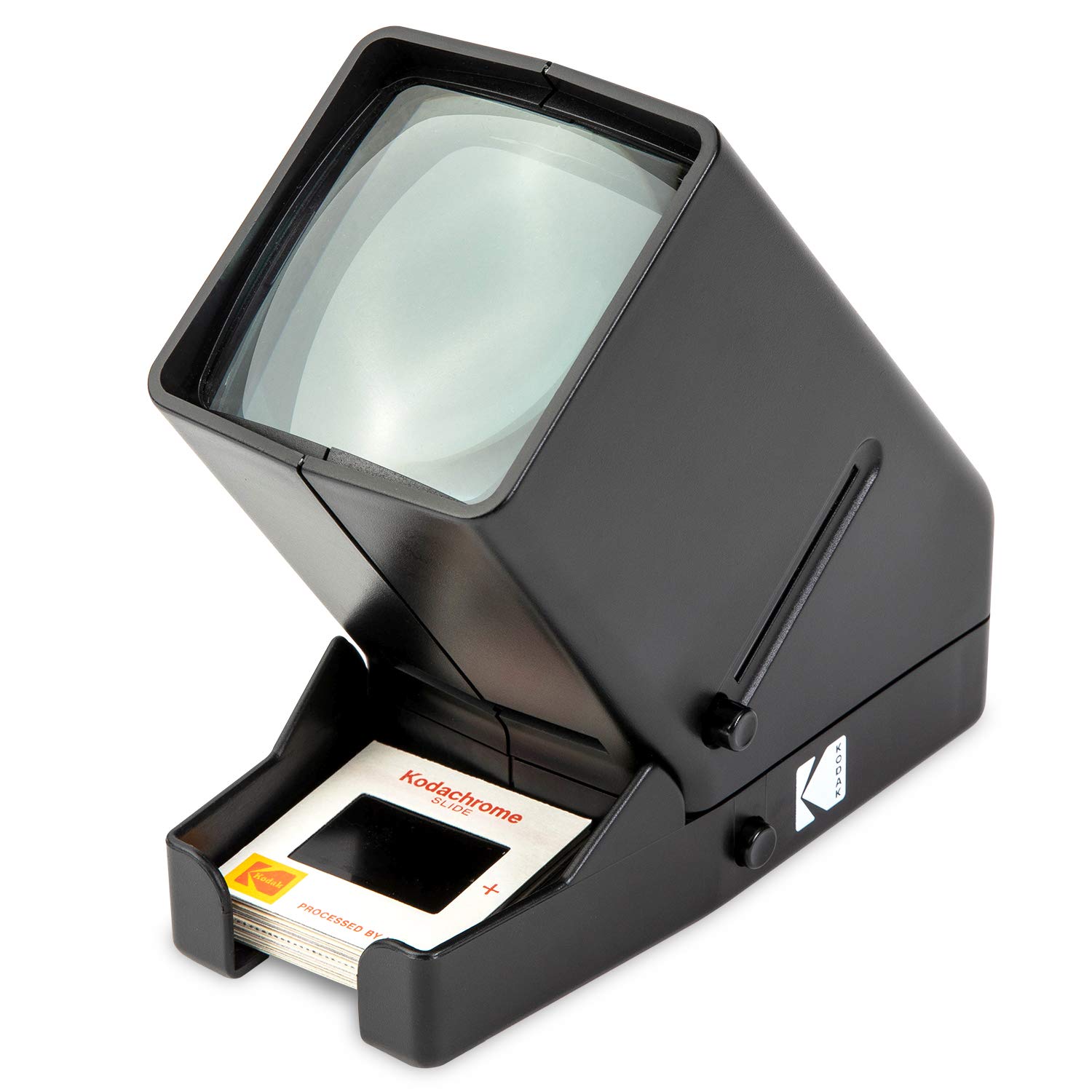
The Kodak 35mm Slide & Film Viewer offers a straightforward way to revisit film archives, illuminating slides and negatives while enlarging them for easier viewing.
This Kodak 35mm Slide & Film Viewer review looks at its simple loading, portability, and the limits of a dedicated viewer.
Kodak Film Viewer Review Summary
The quick verdict
3,000+ ratings
Read Amazon ReviewsKodak 35mm Slide & Film Viewer
A handy choice for families and film photographers who want to view 35mm slides and negatives without setting up a projector.
- Designed to illuminate and enlarge 35mm slides and film negatives.
- Built-in magnifier provides 3X enlargement.
- Large viewing area with daylight LED illumination.
- Dedicated slide slot and film input for loading images.

Pros
- Combines illumination and magnification in one handheld device.
- Separate slide and film inputs provide a clear way to present compatible media.
Consider before buying
- The intended formats are limited to 35mm slides and negatives, so check your archive’s film size before choosing it.
- The 3X handheld viewing approach is for looking at images directly; it does not describe a way to digitize or project them for a group.
Read the full review summary
This handheld viewer combines a backlit viewing area with 3X magnification, giving small 35mm images a larger, illuminated presentation.
A dedicated slide slot and film input make it suitable for looking through a collection one frame at a time, while a quick-eject button helps move between slides.
Battery operation makes it useful when you want to view images away from a desk or projector setup.
It is best suited to casual inspection, sharing family slides, and sorting through negatives; buyers looking for digitization or large group viewing should first confirm that a handheld viewer matches their workflow.
The buying factors
Kodak Film Viewer Scorecard
Editorial scores reflect listed features and buyer fit; they are not laboratory measurements or customer ratings.
Everyday ease of use
The dedicated inputs and quick-eject button support a simple load, view, and move-on routine.
Viewing enlargement
3X magnification can make small frames easier to inspect, though it remains a compact handheld viewing format.
Illumination
The built-in daylight LED backlight is designed to make transparencies visible without relying on room light alone.
Portability
Battery operation supports viewing in different locations, and the product is described as handheld.
Collection compatibility
It is intended for 35mm slides and film negatives, a useful but clearly specific format range.
Group viewing
The handheld design is naturally better suited to one person or passing the viewer around than displaying images to a room.
Key Features and Specifications of Kodak Film Viewer
- Designed to illuminate and enlarge 35mm slides and film negatives.
- Built-in magnifier provides 3X enlargement.
- Large viewing area with daylight LED illumination.
- Dedicated slide slot and film input for loading images.
- Quick-eject button for removing a viewed slide.
- Battery operation for portable viewing; DC power is also possible with a separately sold cable.
Pros and Cons of Kodak Film Viewer
Pros
- Combines illumination and magnification in one handheld device.
- Separate slide and film inputs provide a clear way to present compatible media.
- Quick-eject control makes sequential slide viewing more convenient.
- Battery operation allows viewing away from a fixed power setup.
Consider before buying
- The intended formats are limited to 35mm slides and negatives, so check your archive’s film size before choosing it.
- The 3X handheld viewing approach is for looking at images directly; it does not describe a way to digitize or project them for a group.
- DC cables are sold separately, so buyers who prefer wired operation should check the required cable before purchase.
Who Should Buy Kodak Film Viewer?
Good fit
Consider the Kodak viewer if you have boxes of 35mm slides or negatives and want a convenient way to browse them without assembling a projector setup.
Its illuminated viewing area and 3X magnification are aimed at making small frames easier to see, and the dedicated loading points keep the process uncomplicated.
It also makes sense for family history projects where people want to inspect images individually, select frames to discuss, or sort a collection before deciding what to do with it.
Battery operation gives you flexibility about where to sit and view, while the quick-eject button helps when moving through multiple slides.
Before buying, identify the formats in your collection and decide whether direct viewing is enough.
If you want to preserve images digitally or show them to a room, verify that you have a separate method for those tasks; this viewer’s described role is personal viewing.
Who should skip it
Skip it if your main goal is to scan slides or negatives into digital files, since digitization is not part of the described function.
Look for a different kind of setup if you need to display images at a distance to a group, or if your collection uses formats other than 35mm.
How the Kodak Film Viewer Fits a 35mm Archive
A direct way to inspect small frames
Slides and negatives can be difficult to examine in ordinary room light. The viewer’s backlit area and 3X magnifier address that practical problem together, letting you look at a frame in a compact format.
The magnification is useful for browsing and recognition, but buyers should think of it as a personal viewing aid rather than a substitute for a larger display.
Loading designed for sequential browsing
A dedicated slide slot and film input give the viewer two paths for the supported media, and the quick-eject button is a small but useful detail when moving from one slide to the next.
This design suits a session spent reviewing frames one by one. If you are organizing a large archive, consider how much handling and sorting your project involves, since the described workflow is manual.
Portable power and setup choices
Battery operation makes it possible to use the viewer away from a fixed outlet, which can be convenient when sharing old images in different rooms or locations. DC power is also an option with a separately sold cable.
Check the power arrangement that best fits how long and where you expect to browse.
Choose it for viewing, not preservation
The product is built around illuminating and enlarging 35mm material for direct inspection. That makes it a focused choice for revisiting and sorting images, while a preservation project may need additional equipment or services.
Decide whether your goal is to see the frames now, create digital copies, or present them to multiple people; the viewer’s described features address the first of those needs.
Alternatives to Kodak Film Viewer
No alternative model is recommended here. Compare the viewing format, magnification, and power arrangement that matter to your routine before choosing another option.
Is Kodak Film Viewer Worth It?
The Kodak 35mm Slide & Film Viewer is worth considering if you want a simple, portable way to view compatible slides and negatives.
Its LED backlight, 3X magnification, dedicated inputs, and quick-eject button make a practical combination for browsing an archive frame by frame.
Buy it when direct personal viewing is your goal and your collection is 35mm. If you need digital copies, room-scale display, or support for other film formats, plan on a different solution for those needs.
Your review at a glance
3,000+ ratings
Read Amazon ReviewsKodak 35mm Slide & Film Viewer
A handy choice for families and film photographers who want to view 35mm slides and negatives without setting up a projector.
- Designed to illuminate and enlarge 35mm slides and film negatives.
- Built-in magnifier provides 3X enlargement.
- Large viewing area with daylight LED illumination.
- Dedicated slide slot and film input for loading images.