This Kodak SCANZA film scanner review looks at a standalone digitizer for people sorting through older negatives and slides in several common formats.
Its built-in screen, film adapters, and one-touch scan-and-save approach make it worth considering for straightforward home archiving.
Kodak SCANZA Scanner Review Summary
The quick verdict
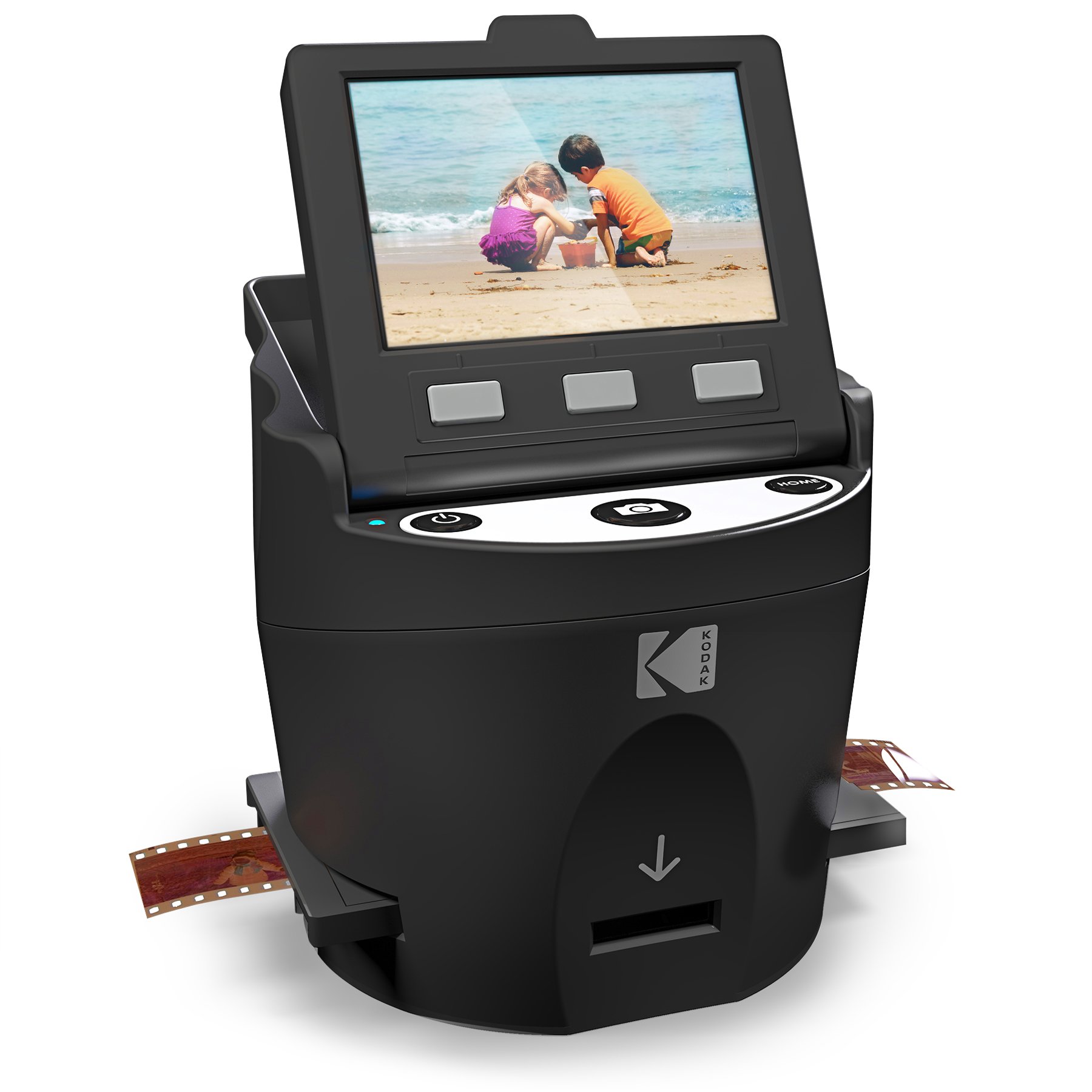
11,000+ ratings
Read Amazon ReviewsKodak SCANZA Film & Slide Scanner
A handy option for families digitizing several supported film formats who want to preview and save JPEGs without a computer-based workflow.
- Converts 35mm, 126, 110, Super 8, and 8mm negatives and slides to JPEG files.
- Provides a 3.5-inch TFT LCD color display with adjustable brightness and a tilt feature.
- Includes multiple film inserts and adapters for loading supported formats.
- Uses large one-touch buttons for scanning and saving.

Pros
- Handles a broad range of still and movie film formats in one device.
- Lets users preview images directly on a tilting screen with adjustable brightness.
Consider before buying
- An SD card is required for saving and is not included.
- The supported formats are specific; film outside the listed 35mm, 126, 110, Super 8, and 8mm types will not suit this workflow.
Read the full review summary
The SCANZA is designed to turn supported film and slides into JPEG files with a simple, self-contained workflow.
It covers 35mm, 126, 110, Super 8, and 8mm media, and the 3.5-inch adjustable, tilting display gives you a way to view images on the device as you work.
Its multiple inserts and adapters, directory for choosing the right tray, and ability to adjust RGB and resolution make it approachable for a mixed collection.
It is best suited to casual family archiving where convenience and format coverage matter; buyers should confirm that their particular film fits the listed formats and plan for a separately supplied SD card.
The buying factors
Kodak SCANZA Scanner Scorecard
Editorial scores reflect listed features and buyer fit; they are not laboratory measurements or customer ratings.
Format coverage
Supports five named formats, including Super 8 and 8mm alongside common still-photo film.
On-device viewing
The 3.5-inch color display has adjustable brightness and a tilt function for previewing images.
Loading flexibility
Multiple inserts and adapters are included, with a directory to help identify the tray.
Workflow simplicity
Large one-touch controls are intended to scan and save in one step.
Image adjustments
RGB and resolution can be edited, offering some control before saving JPEGs.
Storage readiness
The device supports SD cards up to 128GB, but the card is not included.
Key Features and Specifications of Kodak SCANZA Scanner
- Converts 35mm, 126, 110, Super 8, and 8mm negatives and slides to JPEG files.
- Provides a 3.5-inch TFT LCD color display with adjustable brightness and a tilt feature.
- Includes multiple film inserts and adapters for loading supported formats.
- Uses large one-touch buttons for scanning and saving.
- Offers an insert directory, gallery browsing, and controls for RGB and resolution adjustments.
- Supports SD cards up to 128GB; a card must be supplied separately.
- Includes USB power, HDMI, AC adapter, and video cables, plus a film-cleaning brush; described as Mac and PC compatible.
Pros and Cons of Kodak SCANZA Scanner
Pros
- Handles a broad range of still and movie film formats in one device.
- Lets users preview images directly on a tilting screen with adjustable brightness.
- Combines several film adapters with a tray directory to guide loading.
- Offers simple scan-and-save controls alongside basic color and resolution adjustments.
Consider before buying
- An SD card is required for saving and is not included.
- The supported formats are specific; film outside the listed 35mm, 126, 110, Super 8, and 8mm types will not suit this workflow.
- The 3.5-inch screen is useful for previewing, but buyers wanting a larger viewing area may prefer a different design.
Who Should Buy Kodak SCANZA Scanner?
Good fit
Consider the SCANZA if you have a varied family archive that includes one or more of its supported film formats and want to digitize at home.
Its adapter set and on-device display can help keep the process compact, while the directory and large buttons make the basic sequence easier to follow.
It also makes sense if you want to make JPEG copies without building a computer-centered scanning setup.
Have an SD card ready, check the format of your film before starting, and use the included brush to clear dust from the light box and film when preparing images.
Who should skip it
Skip this model if your collection is made up of film formats outside the five listed types, or if you need an archival workflow centered on formats the SCANZA does not name.
Confirm the format markings on your reels, strips, or mounts before choosing.
Look elsewhere if a larger preview display is a priority or if you do not want to supply an SD card for saving scans.
How the Kodak SCANZA Scanner Fits a Home Film Archive
A useful spread of film formats
The SCANZA’s strongest practical advantage is its inclusion of both still-image formats and Super 8 and 8mm. That can simplify a household project when older snapshots and home-movie film are stored together.
The format list is also a firm boundary: check what you own before committing to a workflow.
Previewing and adjusting as you go
A built-in 3.5-inch screen means image review happens on the scanner, and its tilt and brightness controls can make positioning the display more convenient. RGB and resolution adjustments offer some control over the saved JPEGs.
These are useful tools for routine conversion, though they do not establish a particular level of detail or color accuracy.
A compact process with one extra purchase
The included adapters and tray directory are intended to make loading different supported formats more manageable. One-touch scan-and-save buttons keep the interaction straightforward, but the storage card is separate.
Buyers should have a compatible SD card ready and consider how they will organize and back up the resulting files.
Alternatives to Kodak SCANZA Scanner
Slide & Negative Scanners alternative
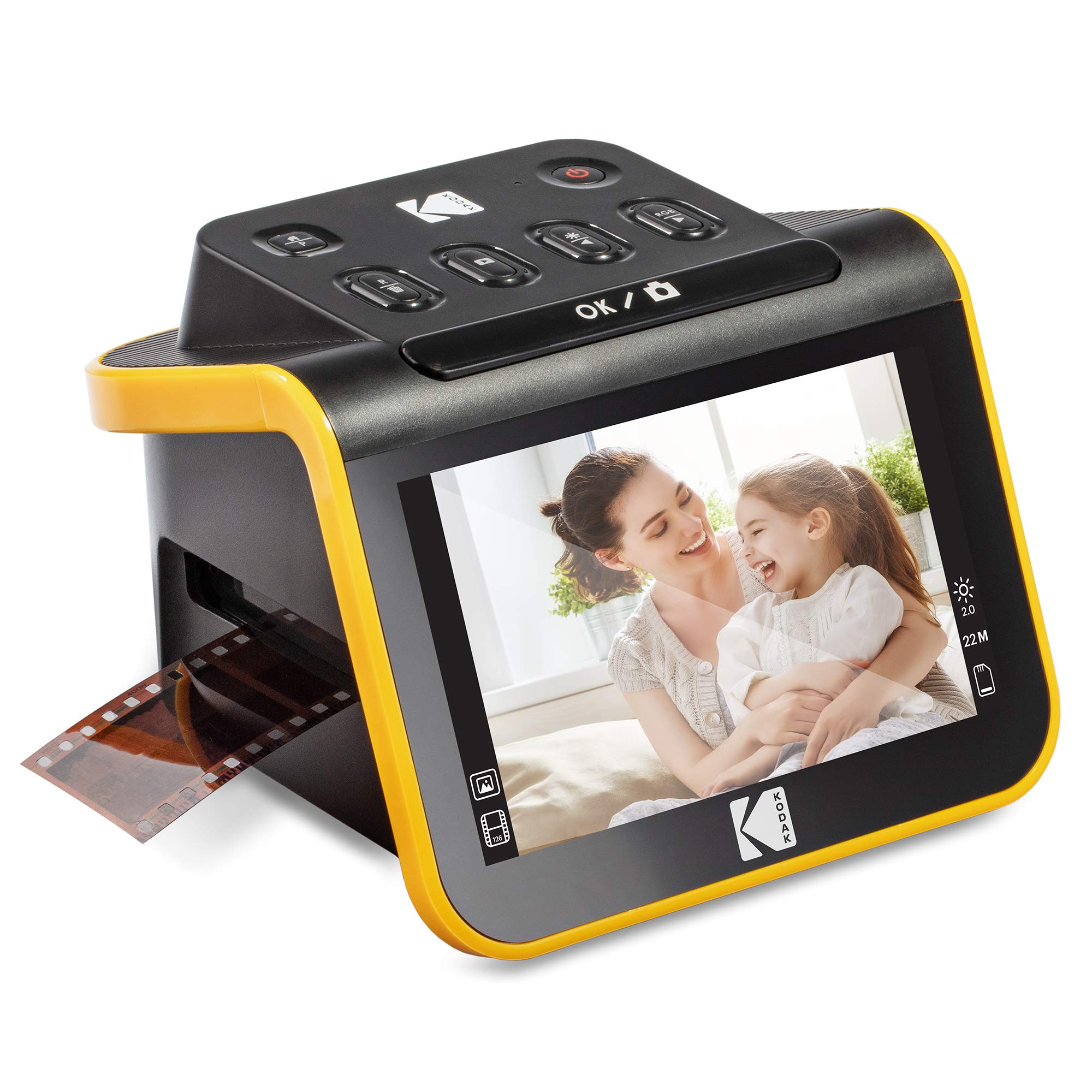
12,000+ ratings
Read Amazon ReviewsKodak Slide N Scan Film & Slide Scanner
Choose the SCANZA if Super 8 or 8mm coverage is important. Consider the Slide N Scan if you work with its listed still-film formats and prefer a larger display and continuous tray loading.
- The Slide N Scan handles 135, 110, and 126 film and slides, with a 5-inch LCD, gallery mode, quick-feeding tray, and support for SD or SDHC cards up to 32GB.
- The SCANZA supports 35mm, 126, 110, Super 8, and 8mm, and has a 3.5-inch tilting screen.
Slide & Negative Scanners alternative
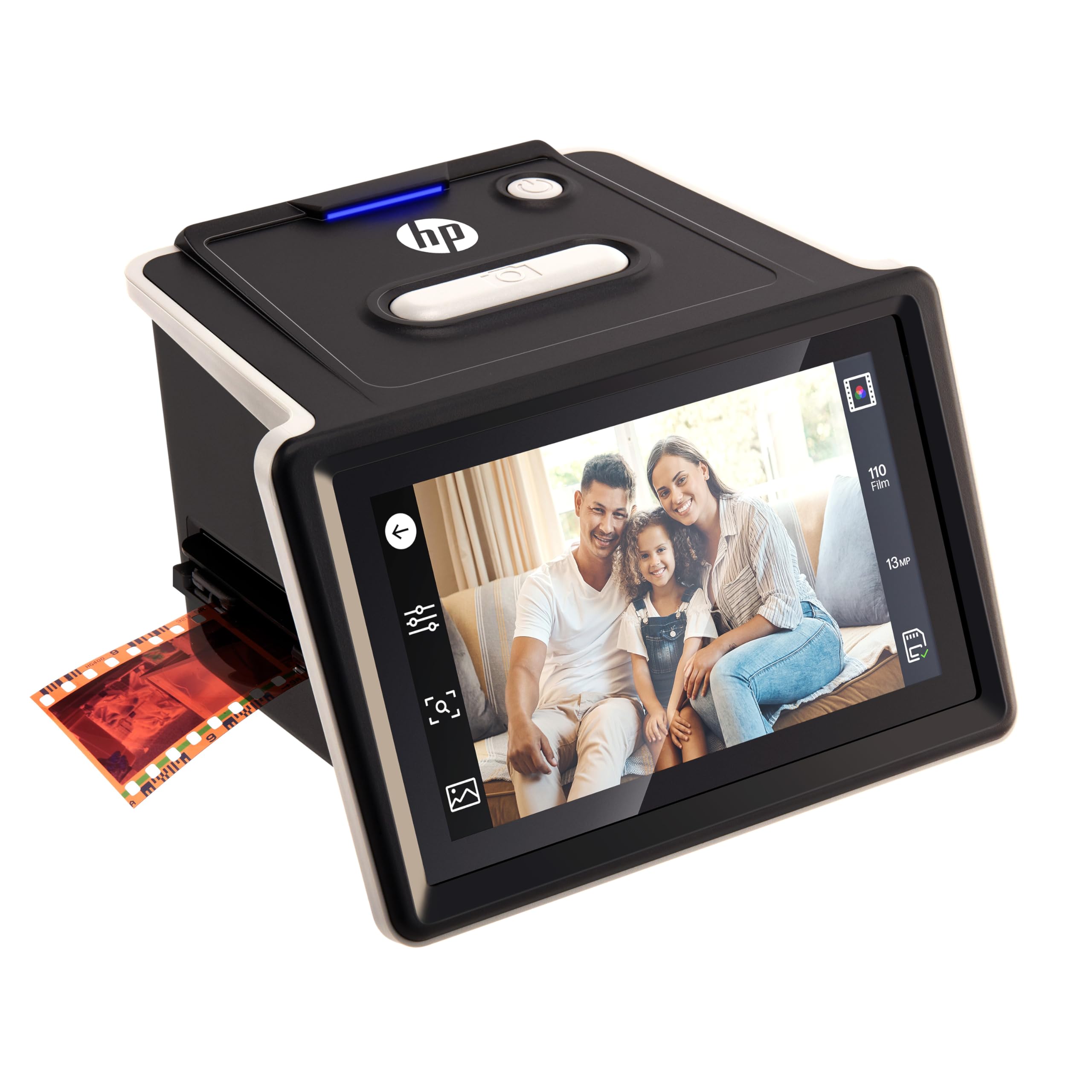
100+ ratings
Read Amazon ReviewsHP FilmScan 5 Film & Slide Scanner
The SCANZA is the more fitting choice when Super 8 or 8mm is part of the archive.
The HP may suit buyers whose collection is limited to its listed still-film formats and who favor a touchscreen preview; check its operating-system requirements if you plan to connect it to a computer.
- The HP FilmScan 5 has a 5-inch touchscreen, quick-load tray, 13MP CMOS sensor with 22MP interpolation, and supports 135, 126, and 110 film and slides.
- It saves to an SD card and is powered by USB Type-C.
- The SCANZA includes adapters for five named formats and provides RGB and resolution adjustments on its 3.5-inch display.
Is Kodak SCANZA Scanner Worth It?
The Kodak SCANZA Film & Slide Scanner is worth considering for home archiving when your collection includes its supported formats, especially if you want one device for still film and Super 8 or 8mm.
The screen, adapter set, and straightforward scan-and-save controls make its approach accessible.
Before buying, verify your film format and plan to provide an SD card.
Its smaller display and format-specific design are the main fit considerations; if those work for your collection, the SCANZA offers a practical way to start converting old film into JPEG files.
Your review at a glance
11,000+ ratings
Read Amazon ReviewsKodak SCANZA Film & Slide Scanner
A handy option for families digitizing several supported film formats who want to preview and save JPEGs without a computer-based workflow.
- Converts 35mm, 126, 110, Super 8, and 8mm negatives and slides to JPEG files.
- Provides a 3.5-inch TFT LCD color display with adjustable brightness and a tilt feature.
- Includes multiple film inserts and adapters for loading supported formats.
- Uses large one-touch buttons for scanning and saving.