The SABRENT HB-PU16 review centers on a straightforward desktop problem: connecting a large collection of USB-A devices without repeatedly swapping cables.
Its 16 USB 3.0 ports, individual power switches, and per-port blue status lights make it worth considering for a busy workstation, though the best fit depends on how many devices you use at once and what their power needs are.
SABRENT HB-PU16 Review Summary
The quick verdict
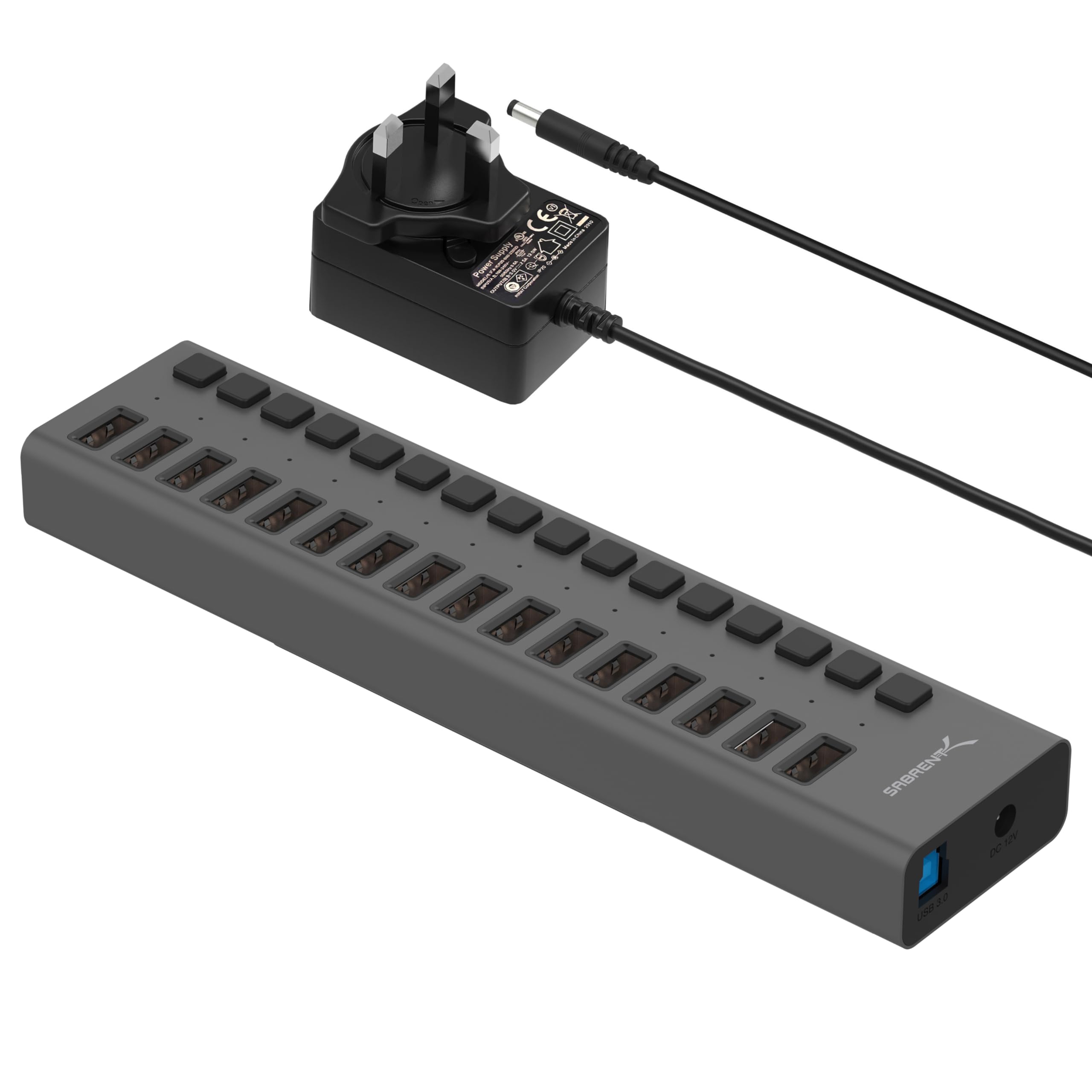
1,000+ ratings
Read Amazon ReviewsSABRENT HB-PU16
A fit for desk setups that need many USB-A connections, per-port switches, and a powered hub for mixed peripherals and charging.
- Sixteen downstream USB 3.0 Type-A ports for connecting multiple peripherals.
- Compatible with USB 2.0 and USB 1.1 devices.
- Data transfers of up to 5Gbps, with supported transmission rates also including 480Mbps, 12Mbps, and 1.5Mbps.
- Individual power switches and blue LED power indicators for each port.

Pros
- A generous 16-port layout can consolidate many USB-A connections.
- Per-port switches make it possible to control individual connections without unplugging each device.
Consider before buying
- Its large port count is most useful in a stationary setup; buyers with only a few devices may not need this many connections.
- The maximum transfer rate is up to 5Gbps, so performance depends on the connected devices and workload.
Read the full review summary
The HB-PU16 offers a high port count in one hub, with support for USB 3.0, USB 2.0, and USB 1.1 devices.
Its plug-and-play, hot-swappable design is convenient for peripherals that come and go, while a switch and blue power indicator at each port make it easier to manage connections individually.
It suits users who want a central USB-A connection point for items such as flash drives, card readers, external hard drives, and other peripherals, with the option to charge devices.
Its 5Gbps figure is an upper limit for supported data transfers, not a promise that every connected device will reach that rate; check the needs of your equipment and the hub’s power arrangement before building a setup around it.
The buying factors
SABRENT HB-PU16 Scorecard
Editorial scores reflect listed features and buyer fit; they are not laboratory measurements or customer ratings.
Port capacity
Sixteen downstream USB-A ports provide room for a large collection of devices.
Device compatibility
Support for USB 3.0, USB 2.0, and USB 1.1 covers several generations of USB peripherals.
Port control
Individual power switches and blue power indicators offer useful control and visibility at each connection.
Data capability
USB 3.0 transfers can reach up to 5Gbps, though actual rates depend on the devices and connection.
Setup convenience
Plug-and-play and hot-swappable operation support convenient connection and removal of compatible devices.
Charging flexibility
The hub supports charging peripherals, but buyers should confirm that its power arrangement fits their combined device load.
Key Features and Specifications of SABRENT HB-PU16
- Sixteen downstream USB 3.0 Type-A ports for connecting multiple peripherals.
- Compatible with USB 2.0 and USB 1.1 devices.
- Data transfers of up to 5Gbps, with supported transmission rates also including 480Mbps, 12Mbps, and 1.5Mbps.
- Individual power switches and blue LED power indicators for each port.
- Plug-and-play and hot-swappable operation.
- Can connect USB flash drives, card readers, external hard drives, and other USB peripherals for access or charging.
Pros and Cons of SABRENT HB-PU16
Pros
- A generous 16-port layout can consolidate many USB-A connections.
- Per-port switches make it possible to control individual connections without unplugging each device.
- Blue indicators provide a quick visual cue for port power status.
- Backward compatibility supports a mix of newer and older USB peripherals.
Consider before buying
- Its large port count is most useful in a stationary setup; buyers with only a few devices may not need this many connections.
- The maximum transfer rate is up to 5Gbps, so performance depends on the connected devices and workload.
- Because the hub can serve both data devices and charging peripherals, check the power requirements of the devices you plan to connect and confirm the supplied power setup meets them.
Who Should Buy SABRENT HB-PU16?
Good fit
Consider the HB-PU16 if your desk regularly has more USB-A devices than your computer can accommodate and you want each port accessible from a central hub.
Sixteen connections leave room for storage, card readers, and other peripherals, while compatibility with earlier USB standards can help keep older equipment in the same setup.
The per-port switches and power indicators are practical when some devices are used only occasionally. You can switch individual ports as needed and see their power status at a glance.
Before buying, make a list of the devices you expect to connect, separating data use from charging, then check their power requirements against the hub’s included power arrangement.
Who should skip it
Look elsewhere if you need a compact travel hub or mostly connect devices using a different connector.
The HB-PU16 is designed around a large set of USB-A ports, so its size and connection style should suit the place you plan to use it.
If your priority is a guaranteed transfer rate for a particular external drive or a specific charging setup, confirm that the hub and your devices support the required arrangement before choosing it.
The up-to figure alone does not establish the speed or charging performance of every combination.
How the SABRENT HB-PU16 Fits a Multi-Device Desk
Sixteen ports for a fixed workstation
The main appeal is capacity: a single hub can provide a connection point for as many as 16 downstream USB-A devices. That can simplify a desk where storage, readers, and other peripherals are used together.
Count the devices you actually need connected at once, and leave room for the hub’s footprint and cable routing in your workspace.
Speed depends on the connected gear
The product supports USB 3.0 data transfers up to 5Gbps and lists lower rates for USB 2.0 and USB 1.1 transmissions.
Those figures describe supported maximums; a device, cable, or task that uses an older standard will not benefit from the highest rate.
For large file transfers, check the interface of the drive and the computer connection as well as the hub.
Switches help manage connections
A separate power switch and blue indicator for each port give users a direct way to manage connected devices.
This may be handy when a peripheral is only needed intermittently or when you want to check which ports show power. Treat the indicators as status cues, and consider whether your routine benefits from controlling ports individually.
Plan for both data and charging
The HB-PU16 is described for accessing or charging a range of USB peripherals. Since device power needs vary, the practical question is how many items you expect to charge while other devices are connected.
Compare those requirements with the included power setup before relying on the hub as a shared charging point.
Alternatives to SABRENT HB-PU16
USB Hubs alternative
6,000+ ratings
Read Amazon ReviewsSABRENT HB-B7C3
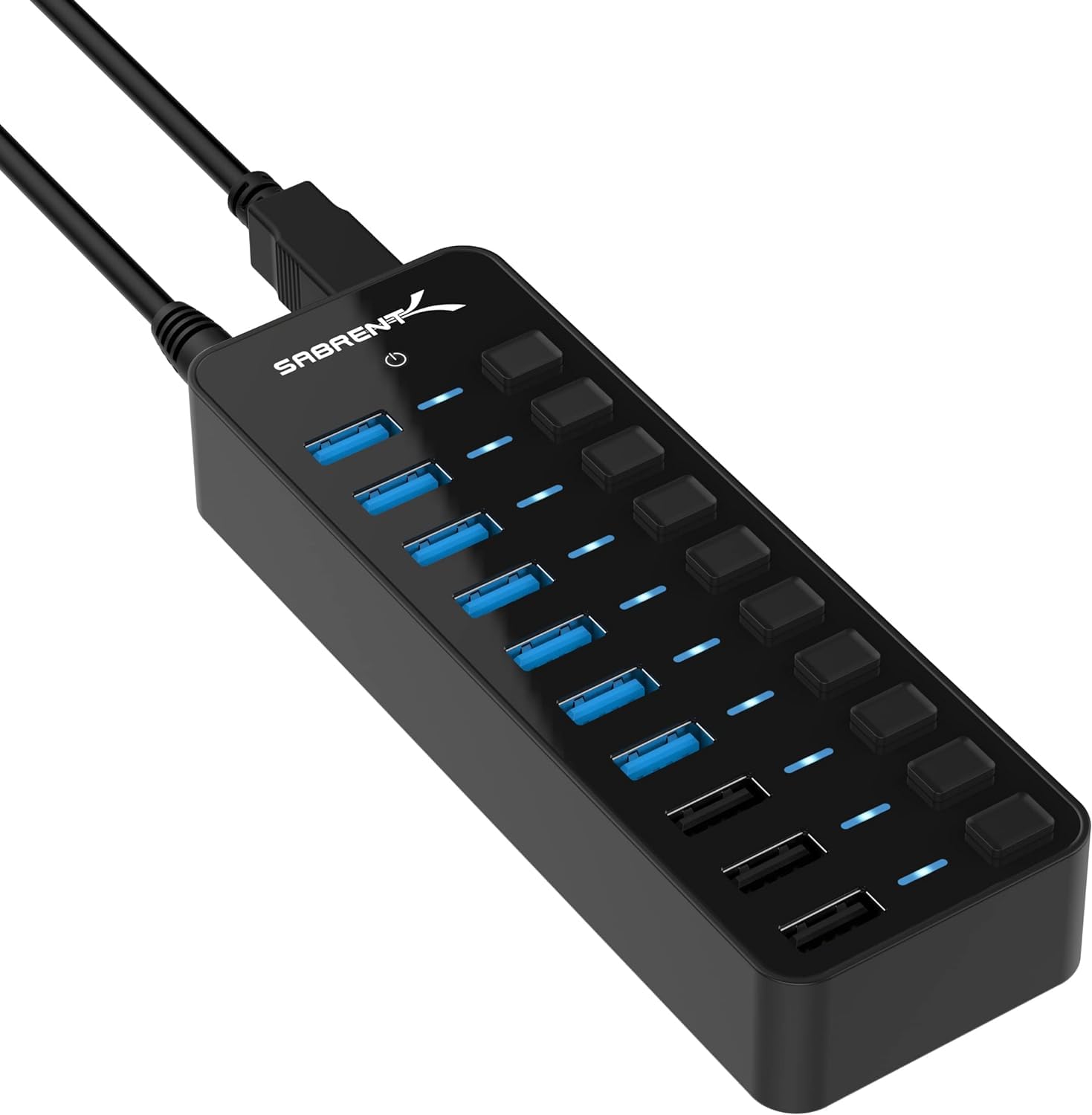
Choose the HB-PU16 when maximizing the number of connections is the priority. The HB-B7C3 is a better fit if seven data connections are enough and you value its three specifically designated charging ports and included 60W adapter.
- The HB-B7C3 connects up to seven USB 3.0 devices, includes three dedicated smart-charging ports, individual switches and LEDs, and comes with a 60W power adapter.
- The HB-PU16 provides 16 USB 3.0 ports, individual power switches, blue port indicators, and support for USB 2.0 and USB 1.1.
USB Hubs alternative
2,000+ ratings
Read Amazon ReviewsSABRENT HB-MC3B
Pick the HB-PU16 for a desk that needs many simultaneously available ports and per-port controls.
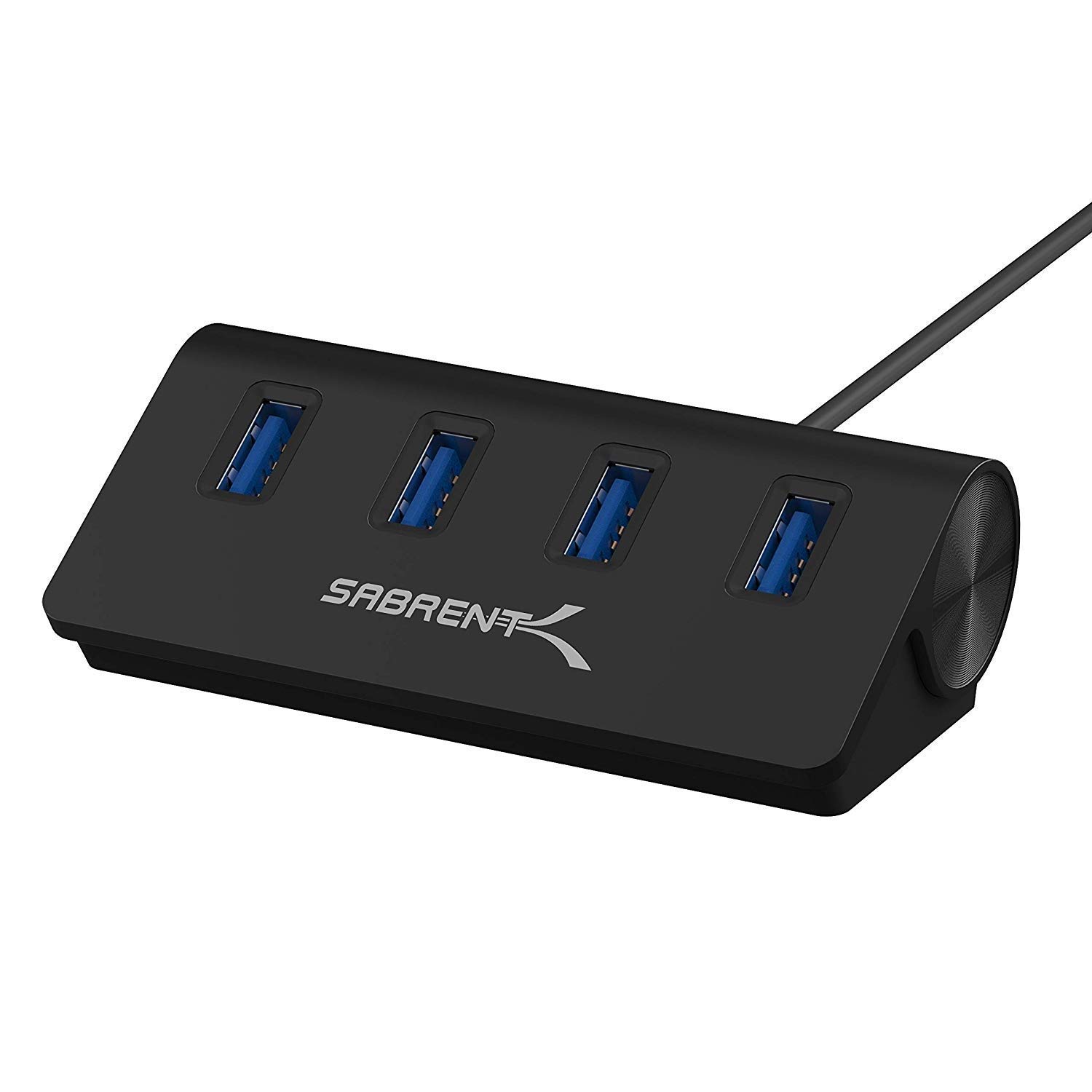
The HB-MC3B suits a simpler setup where four USB 3.0 connections and a longer cable are more useful than a very high port count.
- The HB-MC3B is a four-port aluminum USB 3.0 hub with a 2.5-foot USB 3.0 cable and support for USB 2.0 and USB 1.1 devices.
- The HB-PU16 is a 16-port hub with individual power switches and status lights, aimed at setups with many USB-A devices.
Is SABRENT HB-PU16 Worth It?
The SABRENT HB-PU16 is worth considering for a stationary setup with many USB-A peripherals. Its 16 ports, backward compatibility, individual switches, and visible power indicators address practical connection and control needs.
Before buying, check your device count, connector types, transfer requirements, and combined power needs.
If those align with the hub’s USB-A layout and up-to-5Gbps support, it offers a useful way to organize a crowded desk; a smaller hub is a better match when you need only a few connections.
Your review at a glance
1,000+ ratings
Read Amazon ReviewsSABRENT HB-PU16
A fit for desk setups that need many USB-A connections, per-port switches, and a powered hub for mixed peripherals and charging.
- Sixteen downstream USB 3.0 Type-A ports for connecting multiple peripherals.
- Compatible with USB 2.0 and USB 1.1 devices.
- Data transfers of up to 5Gbps, with supported transmission rates also including 480Mbps, 12Mbps, and 1.5Mbps.
- Individual power switches and blue LED power indicators for each port.